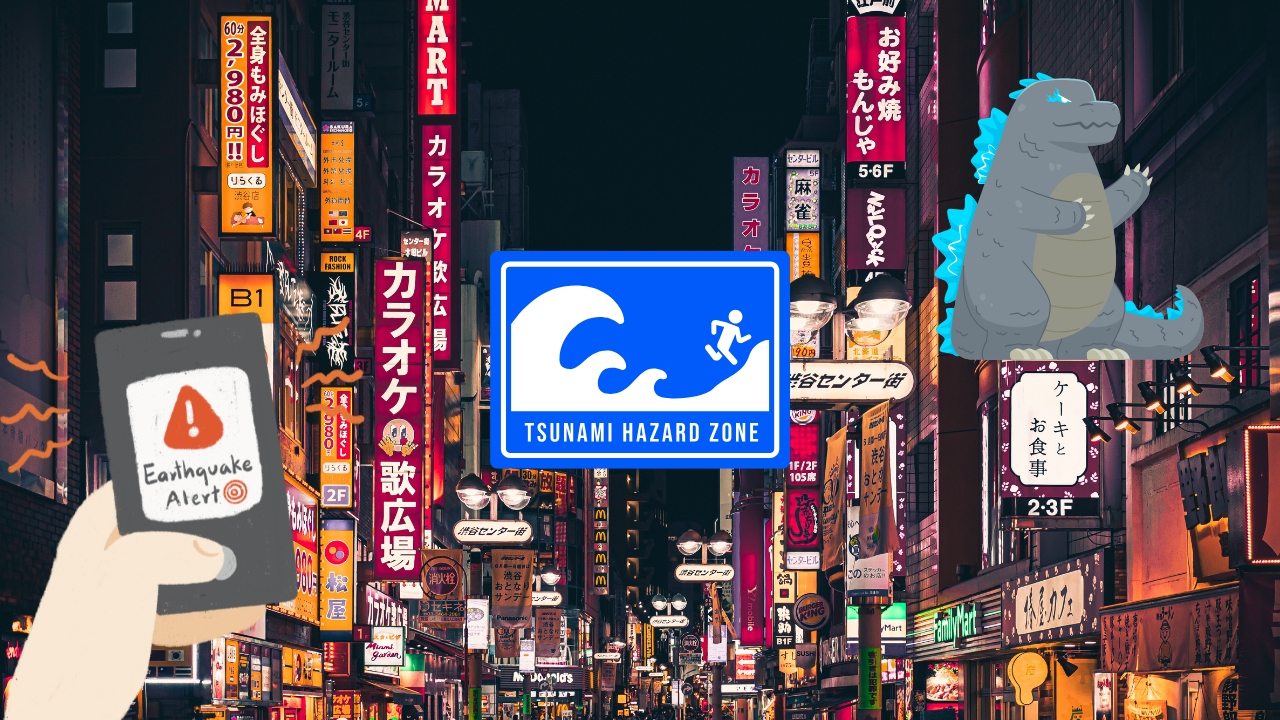
A friend of mine was planning a solo trip to Japan and casually asked me, the travel expert, what she should do in case of an earthquake or tsunami warning while traveling. I had no answer for her, but I realized that she couldn’t be the only one asking, so I decided to get to the bottom of this as safety is always top-of-mind for solo travelers.
First I want to say that Japan is one of the most incredible places on Earth with amazing food and timeless cities. Yes, there’s the occasional earthquake or something else, but don’t fixate on that because you’re there to explore, and not to freak out. Plus, by the end of my post you’ll have lots of tips to stay safe during an earthquake or tsunami alert, and to be extra safe I’ll even talk about what to do if a certain giant lizard decides to make things interesting.
Earthquake Safety – Because Japan Gets Shaky
First, earthquakes are real, but Japan has one of the most advanced safety systems in the world. Buildings are engineered to sway safely, early warning systems exist, and locals treat this stuff like another day at the office. Still, it’s good for you to know what to do. I’ll go over some general advice, and you can find more detailed information on the Japan Tourism Agency website.
Before the Shaking Happens
Download the “Safety tips” app, the official disaster alert app that pushes earthquake and tsunami warnings in English (and 14 other languages). Pro tip: local alerts can beat the shaking by seconds, enough time to brace yourself.
During an Earthquake
If you’re indoors:
- Drop, Cover, Hold On. Get under a sturdy table or doorway and protect your head.
- Stay away from windows or heavy objects – they become flying shrapnel in a jiffy.
- Avoid elevators, even if it seems like a good idea.
If you’re outdoors:
- Move away from buildings, trees, and power lines. Find an open space and protect your head until the shaking stops.
- If you’re near a coast and feel a strong, long quake, get to higher ground immediately. It could be a precursor to a tsunami.
After the shaking:
- Watch out for aftershocks. They’re like sequel earthquakes, and just as annoying.
- Check official information from the Japan Meteorological Agency or NHK World before making decisions. Don’t rely on random TikToks.
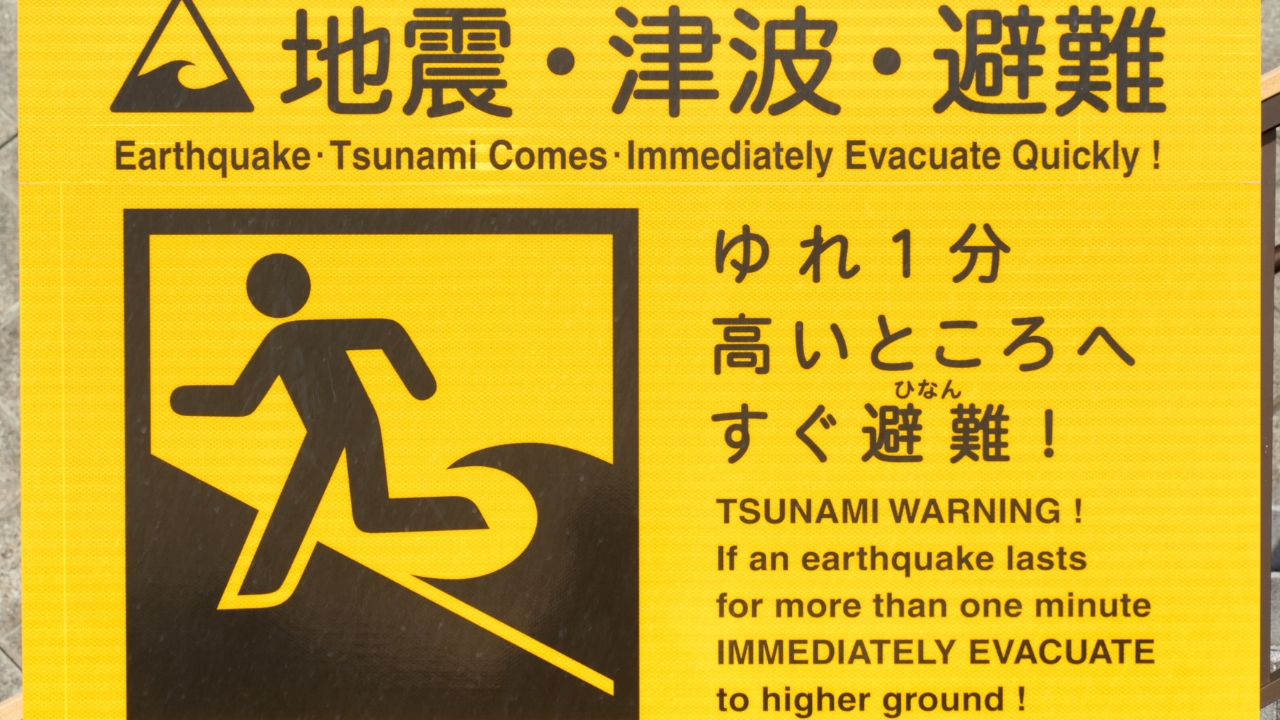
If You Experience a Tsunami Warning While Traveling
Here’s the big one – tsunamis pack serious energy even when they look “small,” so don’t treat them like gentle beach waves.
When a Tsunami Warning Comes In:
- Don’t wait to see it with your own eyes. A tsunami warning means move now.
- Higher ground isn’t a suggestion. Head to the highest ground you can find or a designated evacuation building.
- Tsunamis can strike in waves separated by minutes or even hours. Stay put until authorities say it’s safe.
If you’re by the shore and the water suddenly recedes, don’t wander into the ocean to explore the sea floor, run like hell and get yourself inland and to higher ground as fast as possible. This is a sure sign that a tsunami is headed your way when all that water that went out to the ocean comes roaring back!
Japan has yellow and blue tsunami evacuation signs and maps everywhere in coastal cities. Follow them instead of your inner surfer dude.
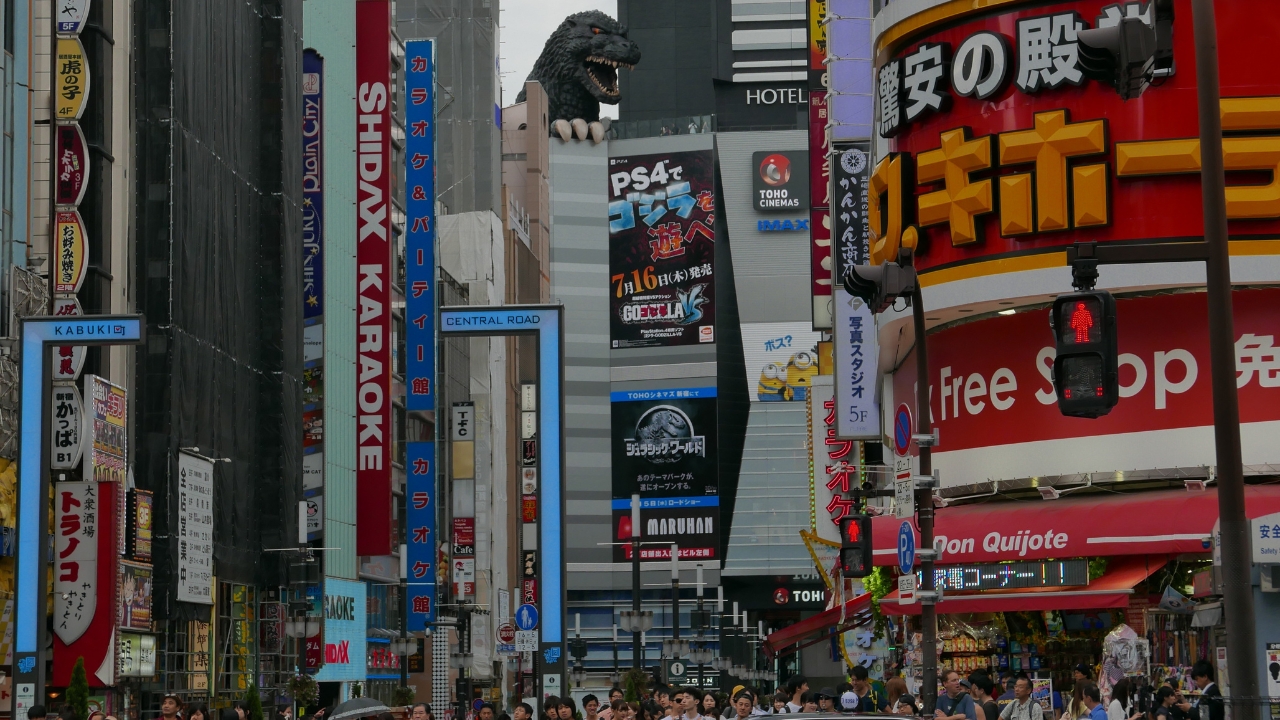
Godzilla Attack Protocol
Okay, so this isn’t official safety guidance, but I want you to be prepared for everything Japan might throw at you.
Step 1: Stay Calm (Maybe Like a Movie Hero)
You’re not the protagonist in a blockbuster unless your reaction is calm, quirky, and camera-ready.
Step 2: Capture the Content
If you can shoot a selfie or video with Godzilla in the background while maintaining your dignity, that’ll be viral gold. (Retakes optional.) This would also be an amazing time to do a livestream on your platform of choice. Your content is sure to go viral.
Step 3: Don’t Run in Straight Lines
Run in zigzags. I might be confusing this with how to survive a bear attack, but my theory is that giant lizards have trouble moving laterally. I just don’t think those big chunky thighs and cankles make it easy for him to move from side to side.
Step 4: Seek Shelter with Great Sushi
If the building you’re in has sushi downstairs, your priorities are to survive and enjoy an epic meal just in case it’s your last.
Step 5: If All Else Fails
Wave politely, capture and post all the content you can, and hope he’s just there for a cultural exchange program.
(Okay, if a giant monster actually shows up, just get away as fast as you can!)
Pre-Trip Checklist
Before you leave, make life easier:
- Install the Safety tips official disaster app.
- Learn a few emergency phrases (like “Where’s the evacuation shelter?”).
- Know your evacuation routes and high ground locations if you’re near coasts.
Bottom Line If You Hear an Earthquake or Tsunami Warning While Traveling
Japan is prepared, its people are prepared, and most travelers never experience anything more than a small shake. But, being ready means less panic, more confidence – and a lot more laughs when your travel stories turn into, “Remember that time I got a tsunami alert in Japan?”
Stay safe, stay smart, and if Godzilla shows up, get the photo first and DM it to me. Thanks!
Here are some additional solo travel safety tips: